


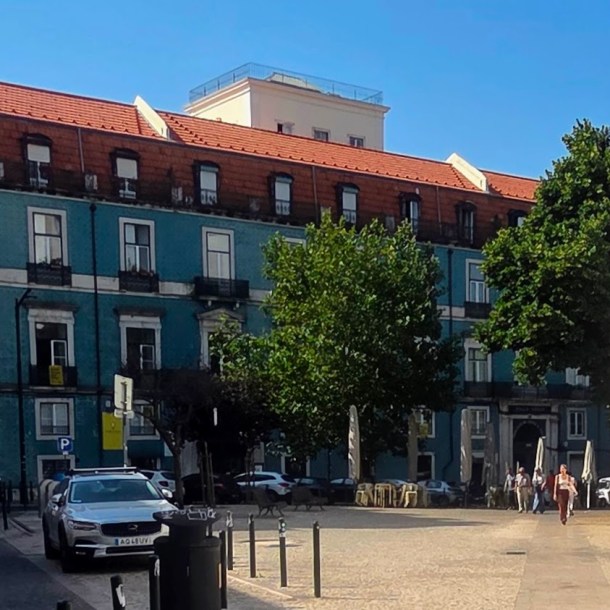

"Inside the quarter, located near Rua da Graça and planned for 120 families was a chapel, a school and near it a cinema, the Royal Cine, the first to screen a movie with... (wait for it!) sound: "White Shadows in the South Sea". Take a walk inside the building as it's still in use, now as a supermarket chain."
— Spotted by Locals Bairro Estrela D'Ouro Lisbon.
You don’t buy a ticket to see this. Bairro Estrela d’Ouro is a completely living, breathing community that you can easily walk right past without ever realizing you’ve missed a portal into 1900s industrial Lisbon.
Most travelers hiking up through the steep roads of our neighborhood stick to the famous viewpoints. If you don’t know exactly where to turn, the entrance looks like any other residential alleyway. But step through the thresholds on the side of the main street, and the urban noise of modern Lisbon drops away completely.
Suddenly, you are standing inside an independent, grid-like micro-village engineered with low-slung, uniform worker houses, beautiful private plazas, and striking industrial ironwork. It is an alternative reality that feels miles away from the city center, yet it sits right in our backyard.
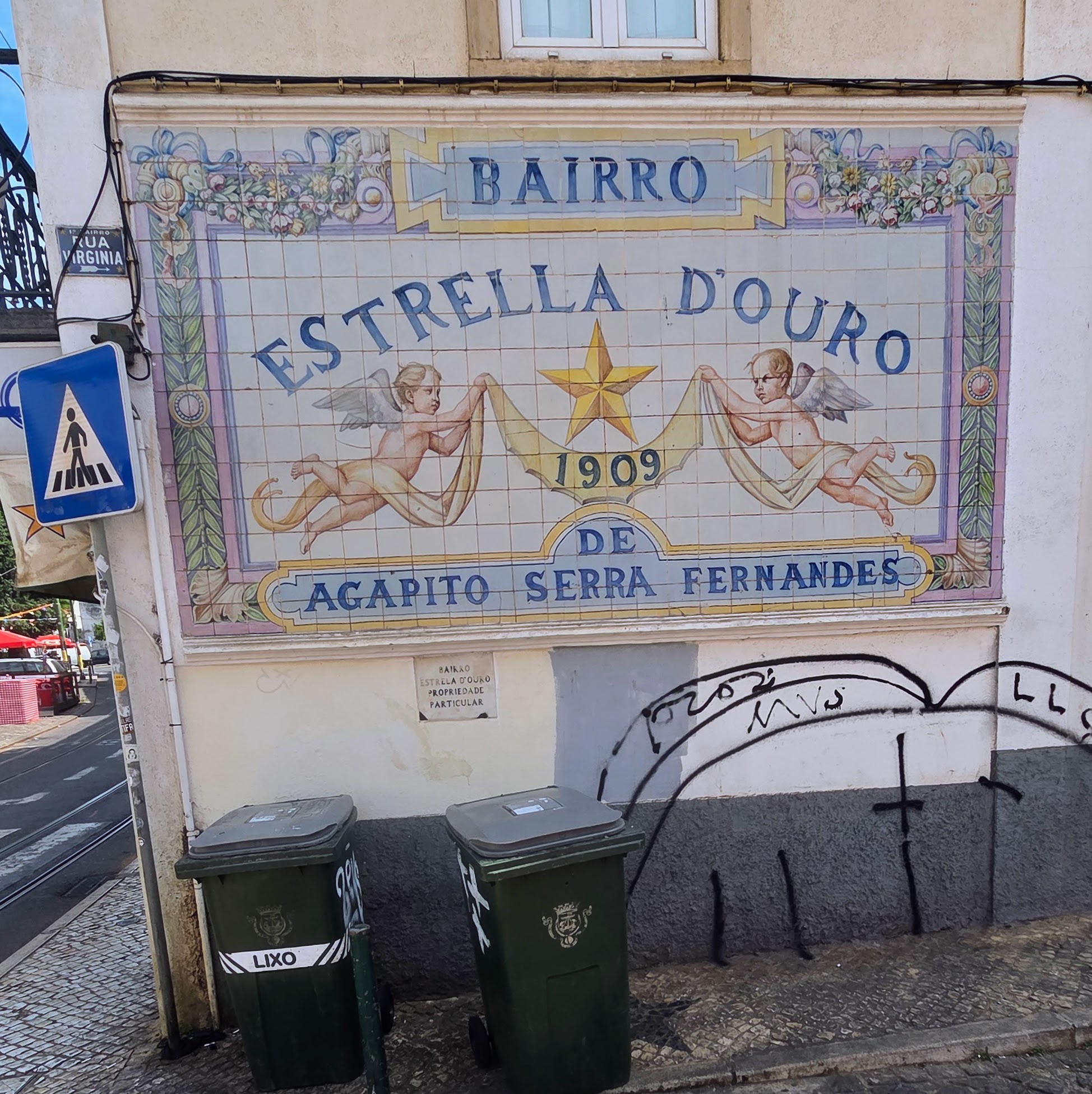
The neighborhood was built between 1907 and 1909 by an eccentric industrial tycoon named Agapito Serra Fernandes. Before he laid a single brick, this hillside was just an empty backyard behind his mansion, the Vivenda Rosalina. Facing a severe labor crisis at his nearby biscuit and tobacco factories, Agapito teamed up with architect Norte Júnior to turn his massive plot into a self-contained worker paradise for 120 families (housing 500 to 700 people), rescuing them from squalid, overcrowded tenements in Alfama and Alcântara.
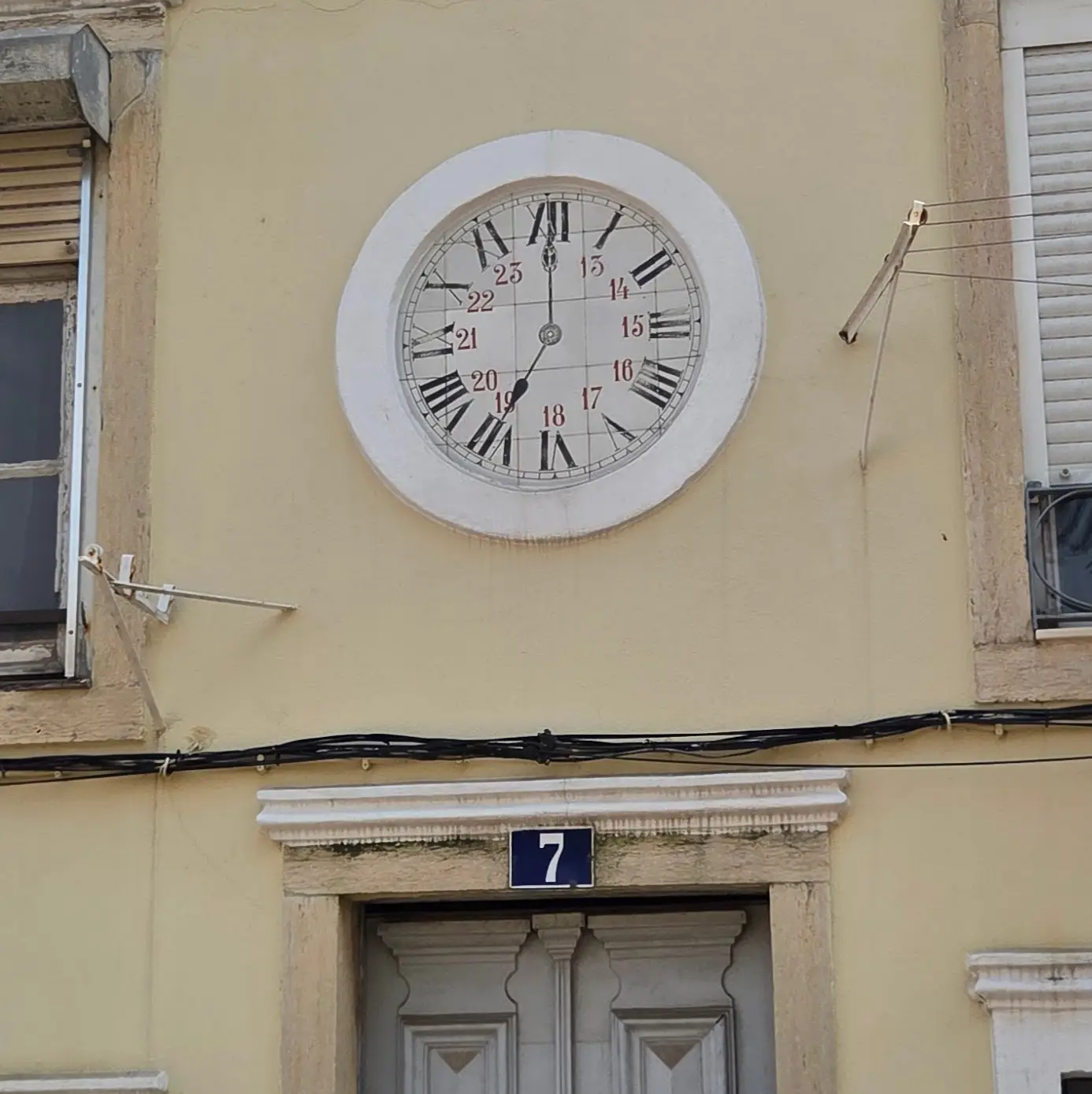
Agapito was completely obsessed with his brand symbol, the golden star, and stamped it onto everything. The five-pointed star is etched into the very DNA of the architecture—found in the pavement, the iron balconies, and the custom tile panels (azulejos). Today, the main houses are still deeply residential, holding a tight-knit local community. Even Agapito’s grand central manor has been beautifully converted into a quiet, non-public elderly home that keeps the social heartbeat of the neighborhood alive. You can see how little the daily rhythms here have shifted since the early days by checking out this unique footage from Graça anno 1930 from the historical Portuguese archives.
You don’t need to look hard, they are all over town. But for the most breathtaking displays, keep an eye out at:
The barrio is open and accessible 24/7/365, but the absolute best time to wander through is midday or early afternoon on a clear, sunny day. When the sun sits high over the hills, it hits the pale yellow and bold red paint surfaces perfectly, casting sharp, beautiful shadows along the narrow paths and highlighting the star details embedded in the facades.
Ultimately, Bairro Estrela d’Ouro is a master class in how urban utility and human-scale architecture can create a lasting community identity. This isn’t a museum piece curated by city officials; it is a 115-year-old operational design strategy that successfully carved out a protected home for working-class families inside the steep, frantic ridges of Graça. It reminds us that when you design a neighborhood around respect and real human needs, the atmosphere becomes entirely timeless.
Relax in Lisbon during our favorite quiet season.
Enjoy a 20% discount on stays between
Nov 15 and Dec 22.