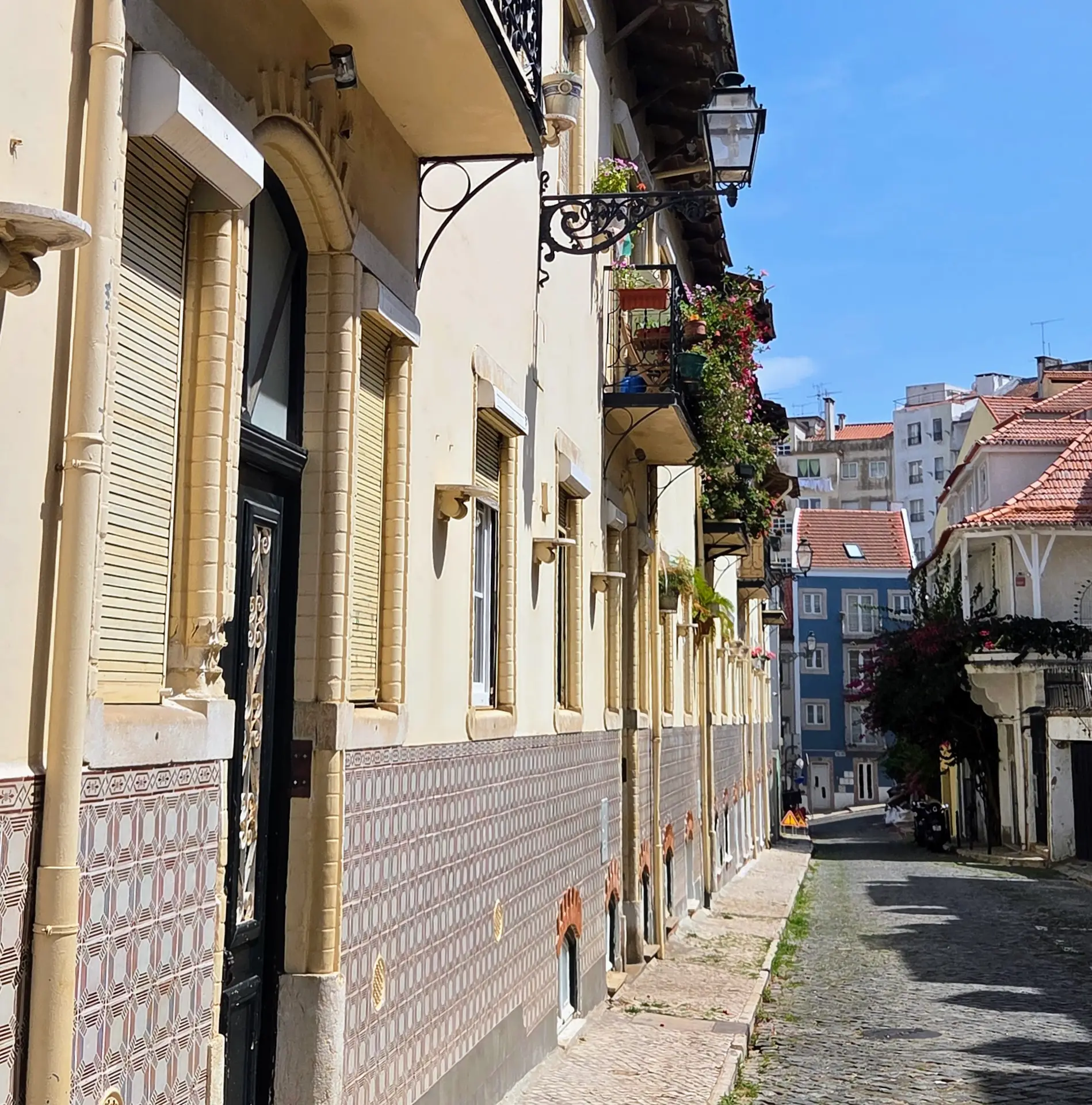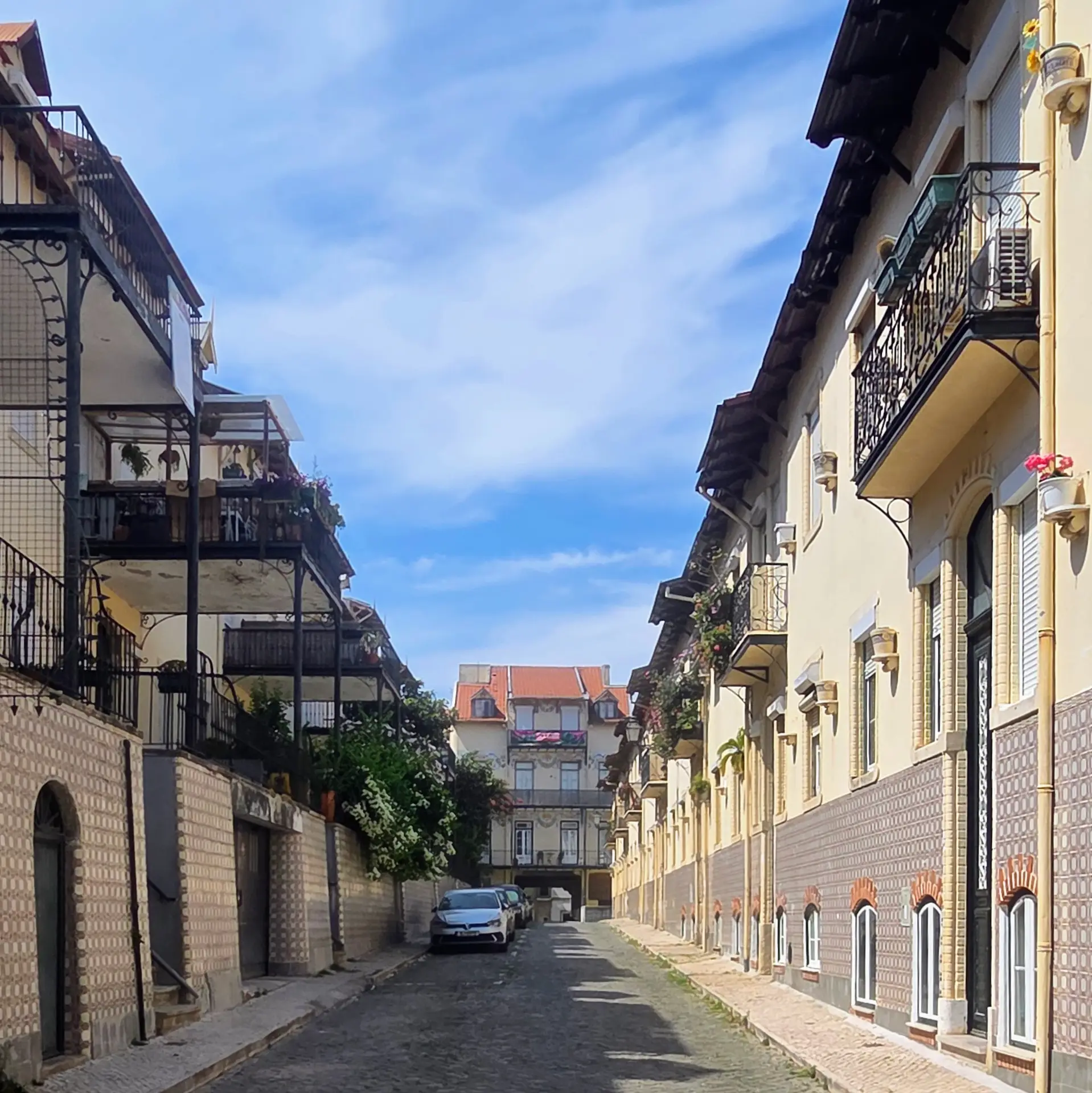


"Vila Berta was built at the beginning of the 20th century to house the working-class people of Graça... Today, it is an architectural gem, famous for its asymmetric, beautiful houses with iron balconies and tiles, making it one of the most unique places to explore in Lisbon."
— From the insider city archives on Spotted By Locals.
You don’t buy a ticket to see this. You don’t stand in a neat, predictable line outside a museum to experience it, either. Vila Berta is a living, breathing architectural sanctuary that you can easily walk right past while hiking up through the steep roads of our neighborhood. It isn’t a staged performance; it’s a neighborhood baseline.
Most travelers heading toward the famous viewpoints stick to the wider paths, completely oblivious to the narrow residential enclaves sitting right behind the main street facades. If you don’t know exactly where to turn, the iron gates look like private property entrances. But step inside, and the urban noise of modern Lisbon drops away completely.
Suddenly, you are standing inside a perfectly symmetric micro-lane engineered with low-slung, uniform pale yellow houses, intricate wrought-iron balconies, and cascading pink bougainvillea. It is an alternative reality that feels miles away from the city center, yet it sits right in our backyard.
The neighborhood was built at the turn of the 20th century by an eccentric, visionary builder named Joaquim Francisco Bertha. Unlike other worker villages of the era that were built as cheap, dark tenements to maximize landlord profits, Bertha wanted to create an architectural masterpiece that prioritized beauty, fresh air, and human connection. He designed the street as a self-contained utopian community where artists, intellectuals, and working-class families could live side-by-side in affordable elegance.
Bertha was completely obsessed with light and symmetry. He painted the entire lane in a soft, light-reflecting pale yellow and designed long, continuous iron balconies so neighbors could step outside and talk to each other across the street. He didn’t build corporate checkboxes; he built a living canvas. You can get a sense of how deeply embedded this neighborhood design is by checking out this unique footage from Graça anno 1930 from the historical Portuguese archives, showing the timeless flow of life on these exact hills.
Today, the lane remains one of the best-preserved architectural anomalies in the city. The houses are still deeply residential, holding a tight-knit community of families who guard this space fiercely. During the annual Santos Populares festivals in June, this quiet lane transforms into one of the most vibrant, packed street parties in Lisbon, covered in colorful streamers and the smell of grilled sardines, showing that Bertha’s dream of community space is still perfectly operational.
The lane is an open, active residential space visible 24/7/365, but it has two completely different personalities depending on the calendar.
Villa Berta isn’t an isolated oddity; it is part of a unique trinity of 1900s worker housing enclaves that defines why Graça is so special.
To understand the raw architectural DNA of our hill, you need to walk the full neighborhood circuit. Wander past the shared iron balconies of Villa Berta, slide down the shortcut to the star-stamped Bairro Estrela d’Ouro, and check out the castle-like tiled facade of Villa Sousa right on the main square.
Put your phone away, walk the triangle between these three gems, and watch real residential life happen. It is an intentional invitation to slow your pace down and experience an authentic neighborhood layout that feels completely like an open home.
At the end of the day, the raw, survivalist history of Vila Sousa matches the exact uncompromising blueprint we run by at Tings Lisbon. It proves that real utility, historical chaos, and daily human life don’t need to be separated into sterile corporate boxes. Just like our resident cats Chimmi and Rocco who claim every corner of our garden, the neighbors here move through this upcycled palace courtyard with an effortless, unpretentious ownership. It is a living reminder that the best parts of Lisbon aren’t found in textbooks or polished tourist displays—they are hidden right behind the heavy iron gates we walk past every day.
Relax in Lisbon during our favorite quiet season.
Enjoy a 20% discount on stays between
Nov 15 and Dec 22.